I like to crochet small projects for my home when I have some free time.
Curtains for the kitchen windows and doorways are one thing I have been thinking about lately.
They do not need to be fancy or take forever to finish.
I put together some simple patterns that might work if you want to try making your own.
Some of them use basic stitches and light yarn so they hang nicely without blocking too much light.
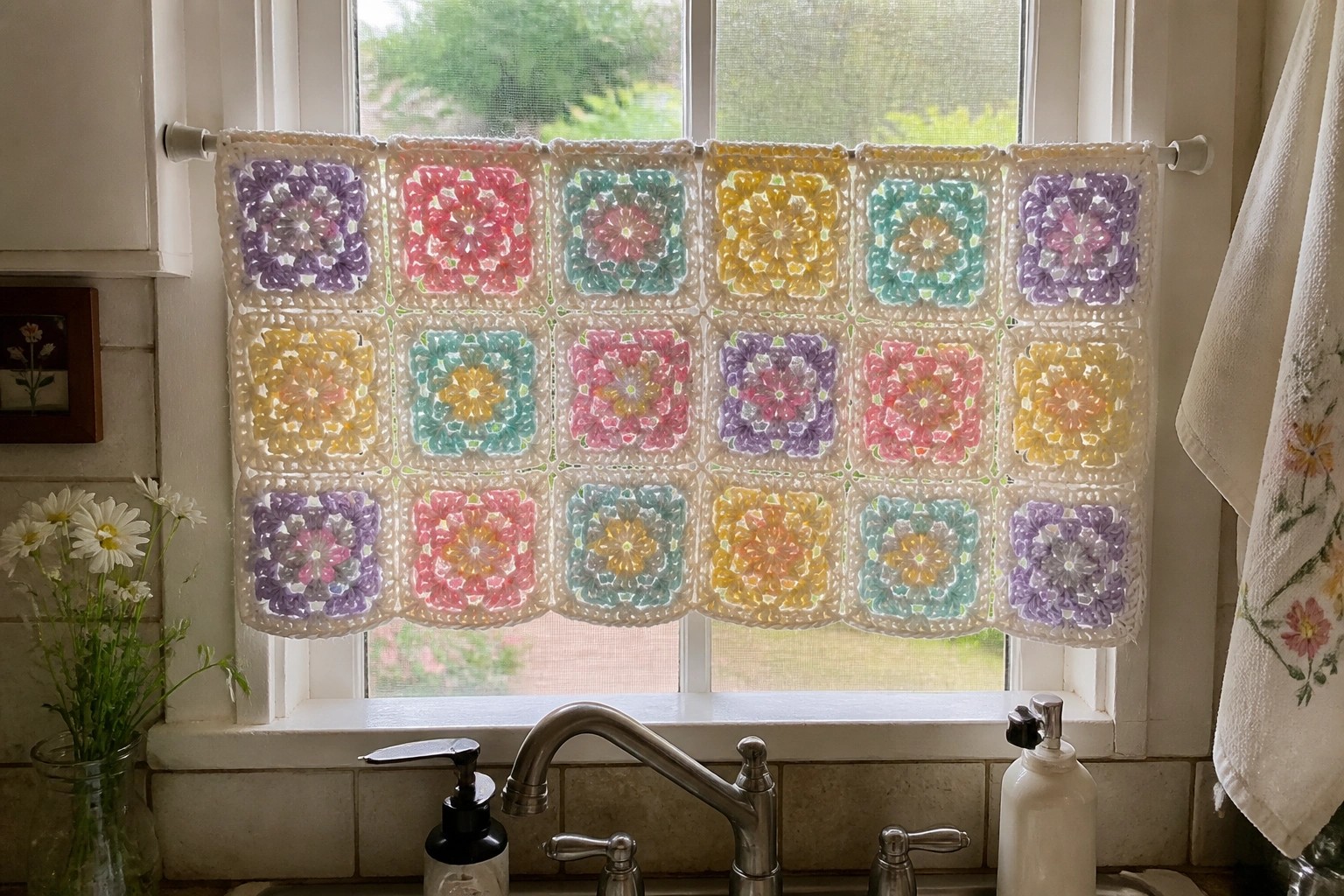
Granny Square Window Valance

A panel of joined granny squares forms a short curtain that hangs from a tension rod across the top of a kitchen window. The squares are arranged in four rows and connected with a white border that creates a grid effect while keeping the piece lightweight. Loops worked along the top edge slip over the rod for simple installation without extra hardware. This approach fits the decor category and suits small windows above sinks or counters.
What makes this idea useful is how quickly the width can be changed by altering the number of squares across. The open centers of the motifs let natural light through while softening the view from outside. You can swap colors to match dishes or paint, or use up scraps from other projects without buying new yarn. A version like this also works well as a doorway panel if scaled taller with extra rows.
Lemon Filet Crochet Window Valance

A filet crochet valance with a repeating lemon motif works well as a light-filtering treatment for kitchen windows. The open grid structure lets daylight through while the yellow fruit and green leaves create a clear repeating pattern across the width. This approach keeps the piece simple to make in sections and easy to hang on a basic rod.
What makes this idea useful is how the mesh background keeps the window functional rather than covered. You can shorten or widen the panel by changing the number of grid repeats and swap the lemon colors to fit other fruit or vegetable themes. A project like this works especially well when you want a seasonal kitchen update that still allows full visibility outside.
Heart Motif Strands for Doorway Curtains

Crochet heart motifs linked in vertical strands form a lightweight curtain that hangs across a doorway or wide window opening. Each strand repeats the same heart shape in soft pastel colors, joined by short chain sections that keep the overall piece open and flexible. The repeating hearts create a simple screen that filters light while marking off space between rooms.
What makes this idea useful is how easily the length can be adjusted by adding or removing hearts to match your doorway height. The design works especially well in kitchens or small apartments where you want a visual break without a solid door. You can swap colors to match existing decor or shorten the strands into smaller garlands for windows if a full curtain feels like too much.
Striped Fan Valance for Window Tops

A repeating fan motif crocheted in alternating white and mustard stripes creates a scalloped valance that covers just the upper portion of a window. The openwork pattern keeps the piece lightweight while the color changes form distinct horizontal bands across the width. This fits the window decor category and works as a quick topper that hangs from a standard rod.
What makes this idea useful is how the repeat count can be adjusted to match different window widths without changing the overall design. The two-color stripes make it simple to coordinate with existing kitchen colors or swap for a new palette. A project like this works especially well when you want light filtering without full curtains and the scalloped edge gives it a clean finish on a basic rod.
Open Lace Curtain Panel for Doorways

A crocheted lace panel made from repeating fan and shell motifs creates an airy curtain that suits a kitchen doorway or window. The open structure lets light filter through while still marking off the space. This project category falls under home decor because the length reaches the floor and the width can be adjusted by adding pattern repeats to fit the opening.
What makes this idea useful is how the vertical repeats make it simple to shorten or lengthen for different door heights. The same motif works for a smaller window version by stopping after fewer rows or using a lighter yarn. A project like this stands out on Pinterest when shown in natural light because the pattern stays visible without extra styling.
Crocheted Fruit Garland for Curtain Rods

A crocheted garland of small rounded fruits strung along a green vine strand creates a simple topper for kitchen curtains. The lemons, oranges, and cherry pairs attach directly to the vine so the whole piece drapes over a rod in short loops. This approach keeps the design light and narrow enough to sit above sheer panels without blocking daylight. It falls into the decor category as an easy-to-move accent that follows the line of the rod.
What makes this idea useful is how the total length adjusts by adding or removing fruit sections to match different window widths. Swap the yellow and orange yarns for apples or strawberries if you want a new color scheme later. The small scale also lets you hang the same garland on a doorway or cabinet handle when you need a quick change.
Bobble Stitch Kitchen Window Valance

A bobble stitch panel works well as a short valance for a kitchen window. The raised circles form even rows across the fabric and let light pass through the open spaces between them. The piece hangs from metal rings on a slim rod so it sits just above the sink area and covers only the lower part of the glass. This type of project fits the simple decor category and needs only basic shaping to match the window width.
What makes this idea useful is how the repeat can be widened or narrowed to fit any window size without changing the overall look. The short drop keeps the workspace clear while still softening the view from outside. You can change the yarn color to match cabinets or switch to a thinner hook for a lighter drape. A project like this also photographs clearly for pattern shares because the texture shows up well in natural light.
Diamond Lattice Mesh Curtain Panel

A mesh curtain worked in a repeating diamond lattice creates an open, lightweight screen for kitchen windows. The pattern uses simple chain and double crochet repeats to form the grid, which filters light without blocking the view. This type of project belongs in the decor category and suits any window where you want coverage that still feels airy.
What makes this idea useful is how quickly the mesh builds once you establish the first few rows. You can change the width by adding more pattern repeats or shorten it for a café-style curtain that covers only the lower half of the glass. The structure also makes it simple to swap colors if you want a version that matches different kitchen palettes.
Mushroom Appliqué Valances
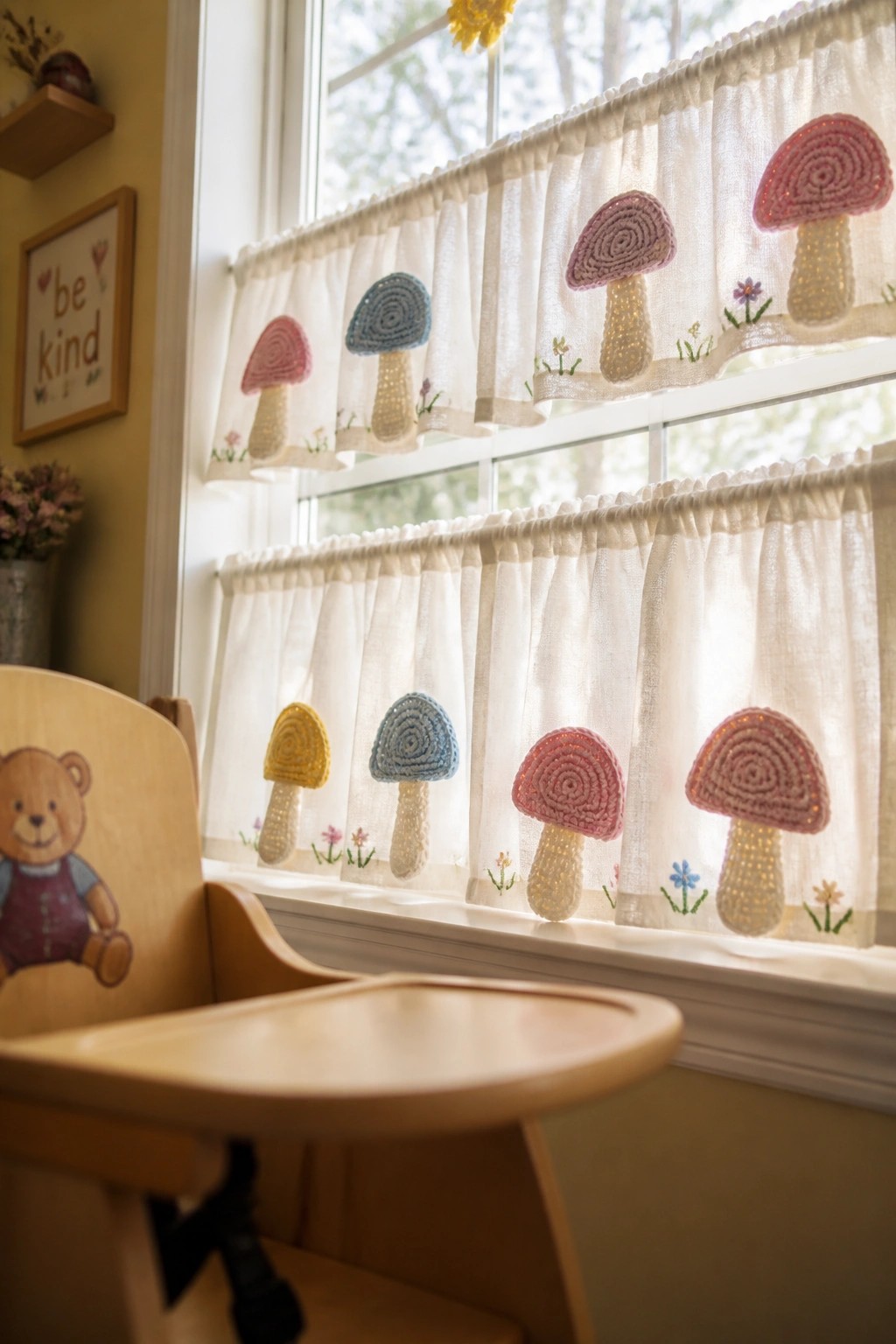
Mushroom shapes made as separate crochet pieces and sewn onto curtain fabric create a repeating pattern along the top edge of a window treatment. Each motif uses a rounded cap in a single color and a stem section with a raised dot texture that catches light from behind the fabric. Small embroidered flowers sit between the mushrooms to fill gaps without adding bulk. This style works as an appliqué project for lightweight kitchen curtains.
What makes this idea useful is how the small size of each motif lets you adjust spacing to match any window width. You can swap cap colors to fit existing kitchen tones or change the shapes entirely if mushrooms do not match the room. The design works especially well on sheer panels where light passes through the fabric around the stitched pieces. For a quick update, crochet a handful of motifs and attach them to plain curtains you already own.
Chain and Circle Motif Door Curtain

A curtain made from circular motifs spaced along long vertical chains creates a simple hanging divider for doorways or wide windows. The circles are worked as separate rounds and then attached at intervals down each chain, letting light and air move through the open spaces between strands. This layout keeps the piece lightweight while the repeated shapes form a clear pattern across the full width.
What makes this idea useful is how quickly you can adjust the drop length or motif spacing by changing chain counts. Shorten the chains and reduce the number of strands to fit a kitchen window instead of a full doorway. You can also swap in leftover yarn for the circles without affecting the overall look. The modular structure makes it easy to add or remove sections later if your space changes.
Sunflower Motif Window Valance

A row of large flower motifs worked in two shades of yellow with white centers forms a scalloped edging that sits across the top of a window. Each motif is joined side by side along a simple chain base, creating a light curtain topper that lets daylight through while adding a clear pattern. The design uses a repeating circular motif that scales easily and sits flat against the window frame.
What makes this idea useful is the way the separate motifs let you adjust the total length without reworking the whole piece. You can change the petal colors to match existing kitchen textiles or shorten the row for a smaller doorway. For decor, this kind of shape works especially well when you want color near the ceiling without heavy fabric. The structure makes this a smart option for renters who need something removable.
Open Mesh Curtain with Circular Motifs
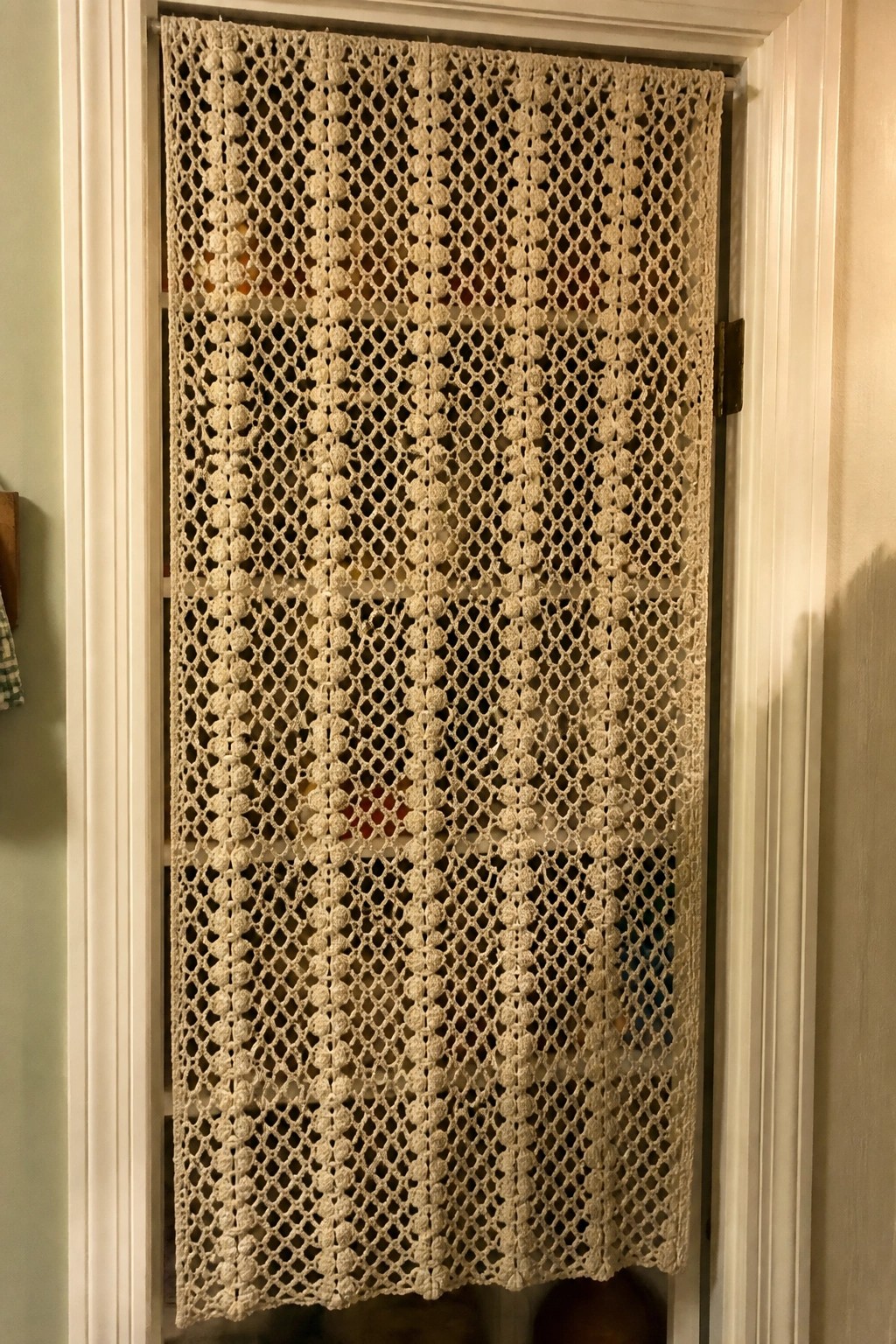
A crocheted doorway curtain in an open grid pattern creates a light divider between rooms. The design repeats vertical lines of raised circular motifs connected by diamond-shaped mesh to let air and light pass through. This style fits kitchen or pantry doorways where full coverage is not needed. The rectangular panel hangs from a simple rod and reaches the floor in one piece.
What makes this idea useful is how the repeat pattern lets you add or remove columns to match any door width. You can change the motif spacing or drop a few rows to shorten it for a window. A project like this works especially well when you want fabric that moves with traffic but still blocks some view.
Crochet Pineapple Curtain Tie-Backs
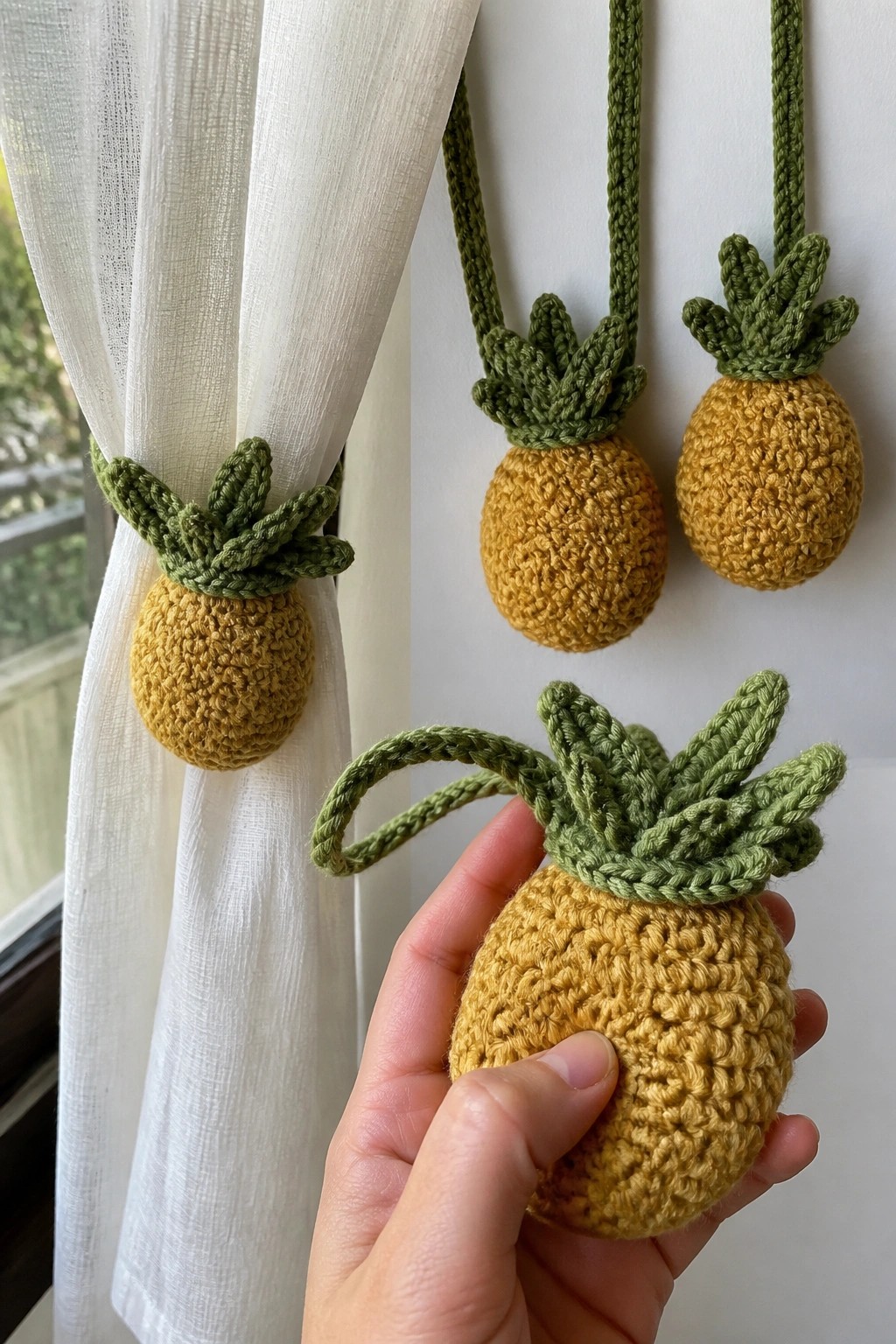
Pineapple-shaped crochet pieces work as curtain tie-backs by combining a round body with a leafy crown and an attached cord. The yellow lower section forms the main fruit shape while the green top creates the leaves, and the cord loops around the curtain fabric to hold it in place. This approach fits the decor category and uses the contrast between the two colors to make the shape readable from a distance.
What makes this idea useful is how the compact size fits kitchen windows without taking up much space. You can change the body color or scale the whole piece up or down with different yarn to match other rooms or curtain widths. For decor, this kind of shape gives a clear theme that still stays simple enough to finish in a few evenings.
Cloud and Star Hanging Garland Curtain

A garland of crocheted clouds and stars hung from a dowel forms a lightweight curtain panel. Each strand carries one or two cloud shapes in white with a yellow star attached at a different height, creating staggered rows across the width. The open spacing between strands and the simple two-color layout keep the piece from feeling heavy. This style fits the garland category and works as decor for windows or narrow doorways.
What makes this idea useful is how the rod length and strand count can be changed to match any window size. You can shorten the drops for a kitchen valance or add more strands for a doorway screen. Switching the star color or using a single motif per strand lets you adapt it quickly for different rooms. The small scale also makes it easy to store flat when not in use.
Scalloped Ruffle Valance
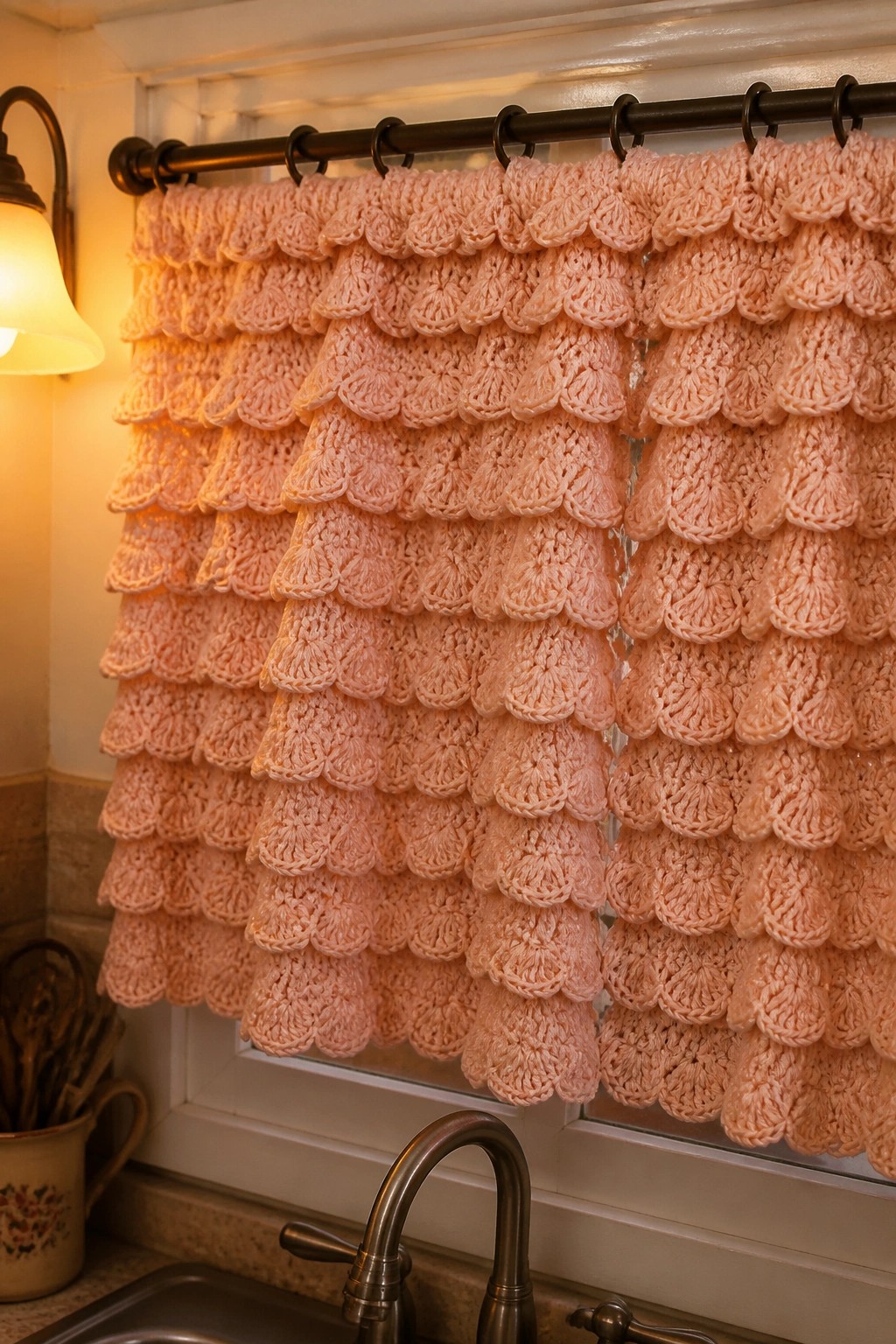
A crocheted curtain built from stacked rows of scalloped fans forms a textured window covering that hangs from a standard rod. Each row overlaps the one below it to create a dense, repeating curve pattern across the full width. This approach suits short kitchen valances or longer panels over doorways and keeps the focus on a single stitch motif rather than color changes. It belongs in the home decor category and scales easily by adding or removing rows.
What makes this idea useful is how the stacked rows let you adjust height without rewriting the pattern. You can work the same fan repeat in a neutral tone for a subtler kitchen look or use a brighter color for a rental that needs temporary color. The structure also works over a doorway if you make two narrower panels instead of one wide one. A shorter test swatch helps check drape before committing to the full size.
Granny Square Curtain for Doorways

A curtain built from joined granny squares creates a simple divider for kitchen doorways or windows. The squares use varied color sequences that form a loose grid pattern, and the open centers let light filter through while still marking off the space. Joining the squares edge to edge keeps construction straightforward and produces a flexible panel that hangs from rings on a rod.
What makes this idea useful is how quickly you can change the finished width by adding or dropping a row of squares. You can reuse leftover yarn from other projects because the squares work independently before joining. For a narrower window, reduce the number across and keep the same height so the curtain still reaches the sill. The open stitch also means the panel stays light and easy to push aside when needed.
Bobble Valance with Beaded Fringe

A crocheted valance made with rows of bobbles and wooden beads forms a short topper that hangs from a curtain rod. The design uses a dense upper section for coverage and a lighter lower section with a beaded fringe that lets light pass through. This style fits kitchen windows or doorways where you want some privacy without blocking the full view. The flat rectangular shape makes it simple to hang and remove for washing.
What makes this idea useful is how easily the width can be adjusted by adding or removing pattern repeats to match your window. You can change the bead colors or fringe length to suit different rooms or seasons. A project like this works especially well as a first try at bobble stitches since it stays flat and does not require shaping. The finished piece takes up little space in storage when not in use.
Crochet Apple Garlands as Hanging Kitchen Curtains

Crocheted apples worked in the round are attached at intervals along green cords to form vertical strands. Each piece includes a small stem and leaf accents, with color shifts across reds, pinks, and greens creating visual variety within the same motif. Multiple strands hung side by side produce a lightweight screen suitable for windows or doorways. This approach belongs to the garland category of crochet decor and relies on repetition and simple shaping for its structure.
What makes this idea useful is how the strand length and spacing can be changed to match different window heights without altering the apple pattern. You can swap the fruit colors or add other simple shapes like pears while keeping the same cord base. A project like this works especially well as a kitchen divider because the pieces are made separately and can be rearranged on a rod later. Shorter versions also translate easily into table garlands or shelf edging.
Openwork Lace Valance for Small Windows

This project uses a repeating openwork motif to create a short curtain panel that hangs from curtain rings on a rod. The design forms a loose net pattern that lets light pass through while adding texture across the window. Its scalloped lower edge gives the panel a finished shape without extra edging work. The style fits the café curtain category, making it useful for kitchens or bathrooms where full coverage is not needed.
What makes this idea useful is how easily the width can be adjusted by changing the number of repeats to fit any window. The open structure keeps the piece lightweight so it moves gently with air flow. You can swap the neutral yarn for a brighter color to match existing kitchen linens or shorten the length further for a narrower valance. A project like this shows up well in searches for simple window treatments because the pattern stays visible from a distance.
Star Garland Hung Along Curtain Edges

A row of crocheted stars joined by simple chain strands creates a lightweight garland that can run across the top or bottom of a kitchen curtain. The open centers in each star keep the piece airy so it does not block light, and the repeating shape gives a clean line that suits both short café curtains and longer panels. You can make the stars in one color or mix soft shades so the garland blends with existing kitchen textiles.
The small scale of the stars lets you change the total length quickly by adding or removing motifs to fit different window widths. This design works especially well when you want a bit of pattern without sewing or installing hardware. For a doorway version, use thicker yarn and larger stars so the garland shows up from across the room. The repeat pattern is easy to adjust if you want to match the exact colors already in your kitchen.
Lacy Doorway Valance with Hanging Pom-Poms

A crocheted valance for doorways uses an open lace pattern worked across a rod to create a light topper with scalloped edges. Small clusters of pastel pom-poms hang from the lower edge at intervals to add texture and a bit of color contrast. This design belongs in the decor category and suits any passage where a full curtain would block too much light or view.
What makes this idea useful is how easily the pattern repeat can be adjusted to match the exact width of a doorway. The pom-poms can be changed to solid colors or omitted entirely if a simpler look is preferred. A project like this works especially well in kitchens or hallways where a soft divider is needed without losing visibility. Shortening the hanging length also turns the same pattern into a window valance.
Modular Circular Motifs for a Kitchen Valance
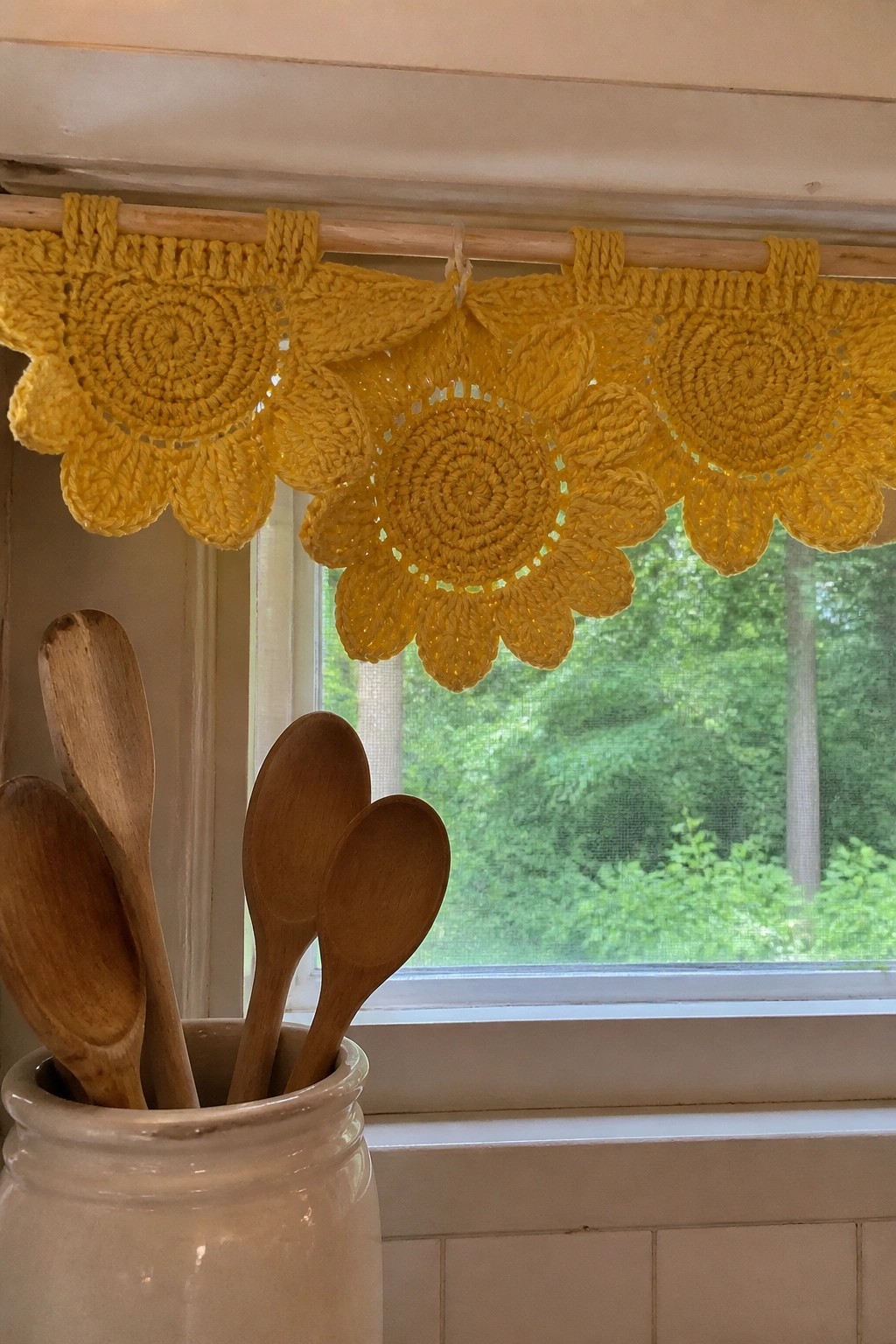
A valance built from joined circular crochet motifs creates a lightweight window treatment that fits kitchen spaces. Each motif uses a solid center with an outer ring of stitches that form scalloped edges, and the pieces link together along the top edge to hang from a rod. The openwork between motifs allows light to filter through while the repeating shapes give the piece a structured look. This approach fits the home decor category and works for short spans above sinks or small windows where a full panel would block too much view.
What makes this idea useful is how the separate motifs let you change the total width by adding or removing sections to match your window. You can shift the color to coordinate with cabinets or walls without altering the pattern itself. The simple rod hanging means no extra hardware is needed and the piece stays easy to remove for washing. A project like this adapts quickly into a doorway version or a shorter version for cabinets by scaling the motif size down.
Granny Square Pockets Over a Mesh Door Curtain

Granny squares worked in multiple colors form a row of pockets that hang from a simple rod across a doorway. The squares are joined into a strip and edged with a lighter border that creates the hanging loops. Below the pockets, a separate panel of open star motifs adds a light-filtering layer that still lets air move through the screen. The whole piece stays narrow enough to leave the lower part of the door clear while giving extra storage space at eye level.
What makes this idea useful is the easy way the pockets can be sized to fit any rod length or width. You can change the number of squares or the hanging depth to suit a window instead of a door. The design also works for holding small herb pots or kitchen tools without taking up counter space. Make the squares in one color family if you want a calmer look or keep the mix for more contrast.
Frequently Asked Questions
What yarn works best for crochet curtains in a kitchen setting?
Cotton yarn is ideal because it handles moisture from cooking and washing well without stretching or developing mildew. Choose a medium-weight cotton that feels sturdy yet flexible, and opt for machine-washable varieties so you can clean the finished curtains easily. Avoid wool or acrylic blends that may felt or hold odors in humid areas.
How do I measure windows and doorways accurately before starting a project?
Measure the width of the window or doorway first, then add 2 to 4 inches on each side for fullness so the curtain drapes nicely. For length, decide if you want the curtain to reach the sill, hang below it, or cover a doorway fully, and add extra inches for a hem or hanging loops. Always measure twice and note any obstacles like handles or trim that could affect the final fit.
Are these simple crochet curtain ideas suitable for beginners with basic skills?
Yes, many of the designs use basic stitches like single crochet, double crochet, and chain spaces, which most beginners already know. Start with a small window panel to practice tension and gauge before moving to a larger doorway project. If a pattern includes a new stitch, look for online video tutorials that show it step by step to build confidence quickly.
How should I install and hang finished crochet curtains without damaging walls?
Use tension rods or lightweight curtain rods that fit inside the window frame so no drilling is needed. Crochet a row of evenly spaced loops or a casing at the top edge to slide over the rod. For doorways, consider clip-on rings that attach to the crochet fabric and slide along a rod, allowing easy removal for cleaning.
What is the best way to care for and clean crochet curtains used in a kitchen?
Spot clean spills immediately with a damp cloth and mild soap, then air dry flat to prevent stretching. Every few months, remove the curtains and wash them on a gentle cycle in cold water inside a mesh laundry bag. Lay them flat to dry rather than using a dryer, and reshape while damp if needed to keep the pattern looking neat.

Hi, I’m Emily, the creator of The Yarn Haven.
I picked up my first crochet hook as a kid, sitting on the floor next to my grandmother while she worked on blankets for everyone in the family. What started as a simple hobby slowly became my favorite way to unwind and create something meaningful with my hands.
I believe crochet should feel relaxing, not stressful. Most of the ideas I share are simple, cozy, and practical. Things you can actually finish and enjoy, even if you only have a little time in the evenings.
The Yarn Haven is where I share crochet inspiration, yarn ideas, and projects that fit into real life. Nothing fancy. Just warm, handmade creativity that feels good from start to finish.