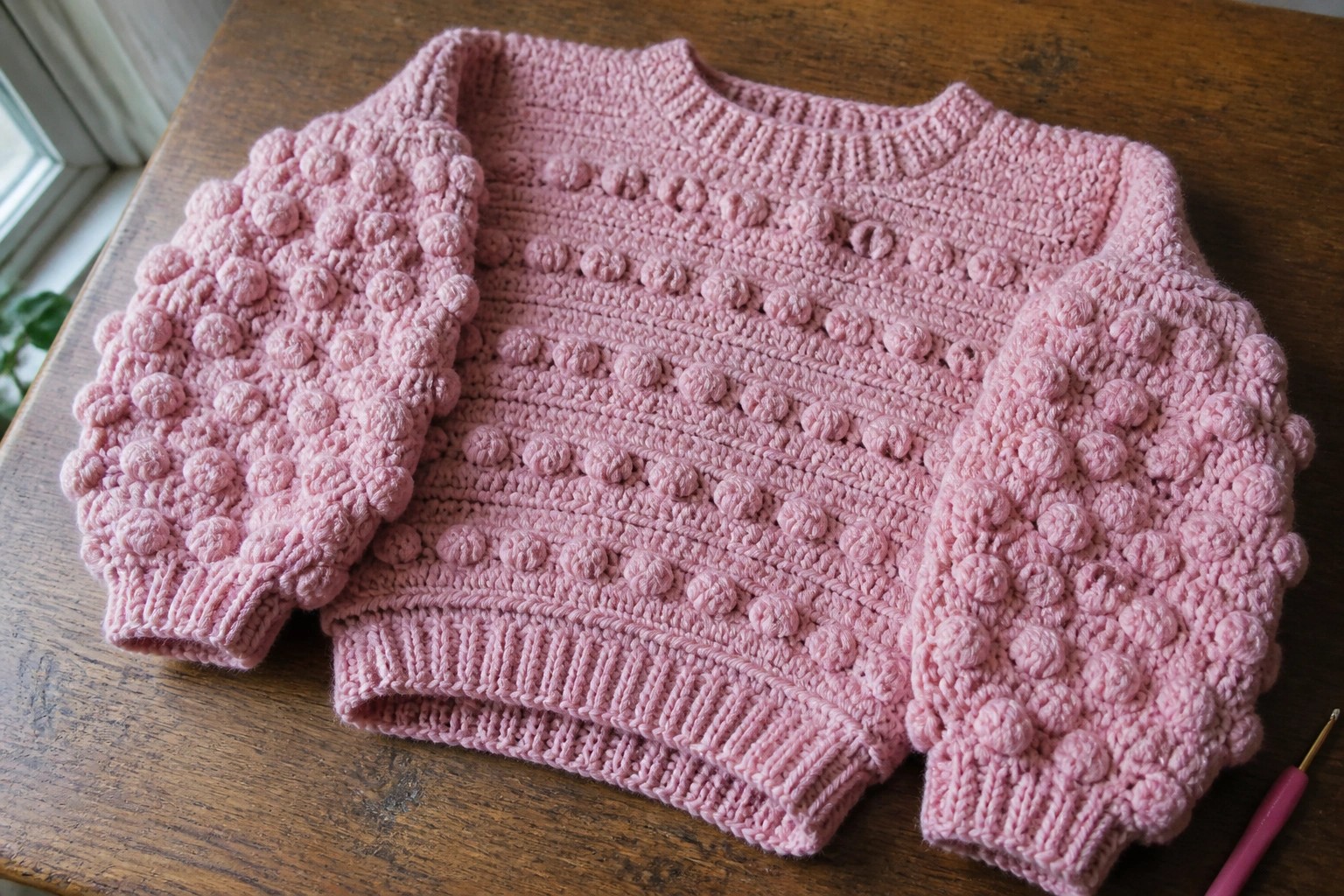
I like to crochet sweaters in the cooler months because they turn out wearable and cozy.
Some of my recent projects have featured stronger textures that stand out.
I put together this list of 21 patterns after looking through many options online.
They all use modern shapes combined with textured stitches.
These are the ones I found most appealing for everyday wear.
Bobble Sleeve Sweater
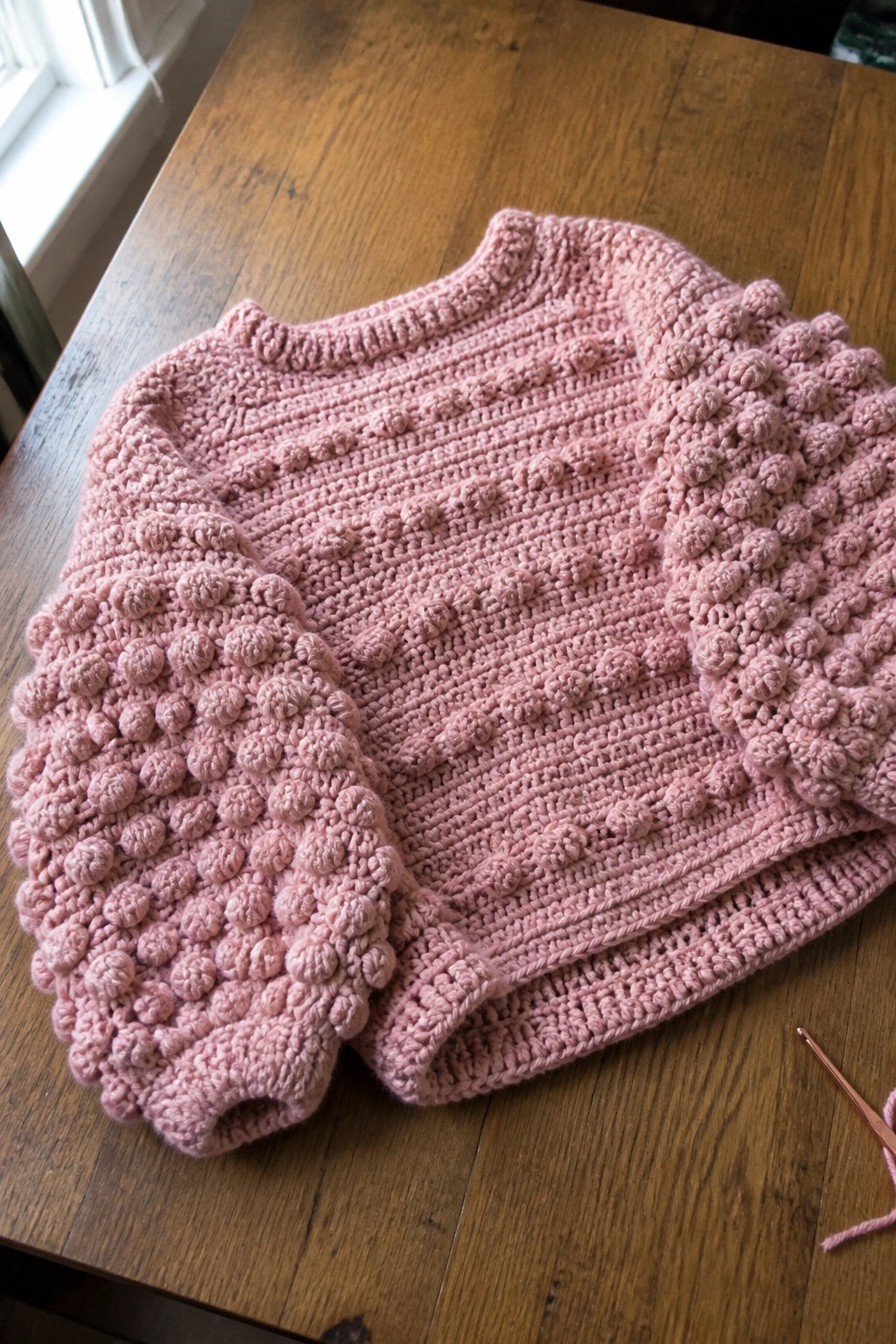
A pullover sweater uses raised bobble clusters to create bold texture on the sleeves and in scattered rows across the body, while the main sections stay flat with a basic stitch. The bobbles run in dense bands near the cuffs and shoulders, then thin out toward the center for contrast. This style works as a wearable that balances visual impact with a straightforward construction.
What makes this idea useful is the option to limit the bobbles to the sleeves so the body stays quicker to finish. You can shift the bobble spacing or extend the texture further down the arms to change the look without rewriting the whole pattern. The design adapts well to different sizes by adjusting the number of bobble rows, and the texture photographs clearly for pattern sharing.
Cropped Cardigan with Grid Stitch Texture
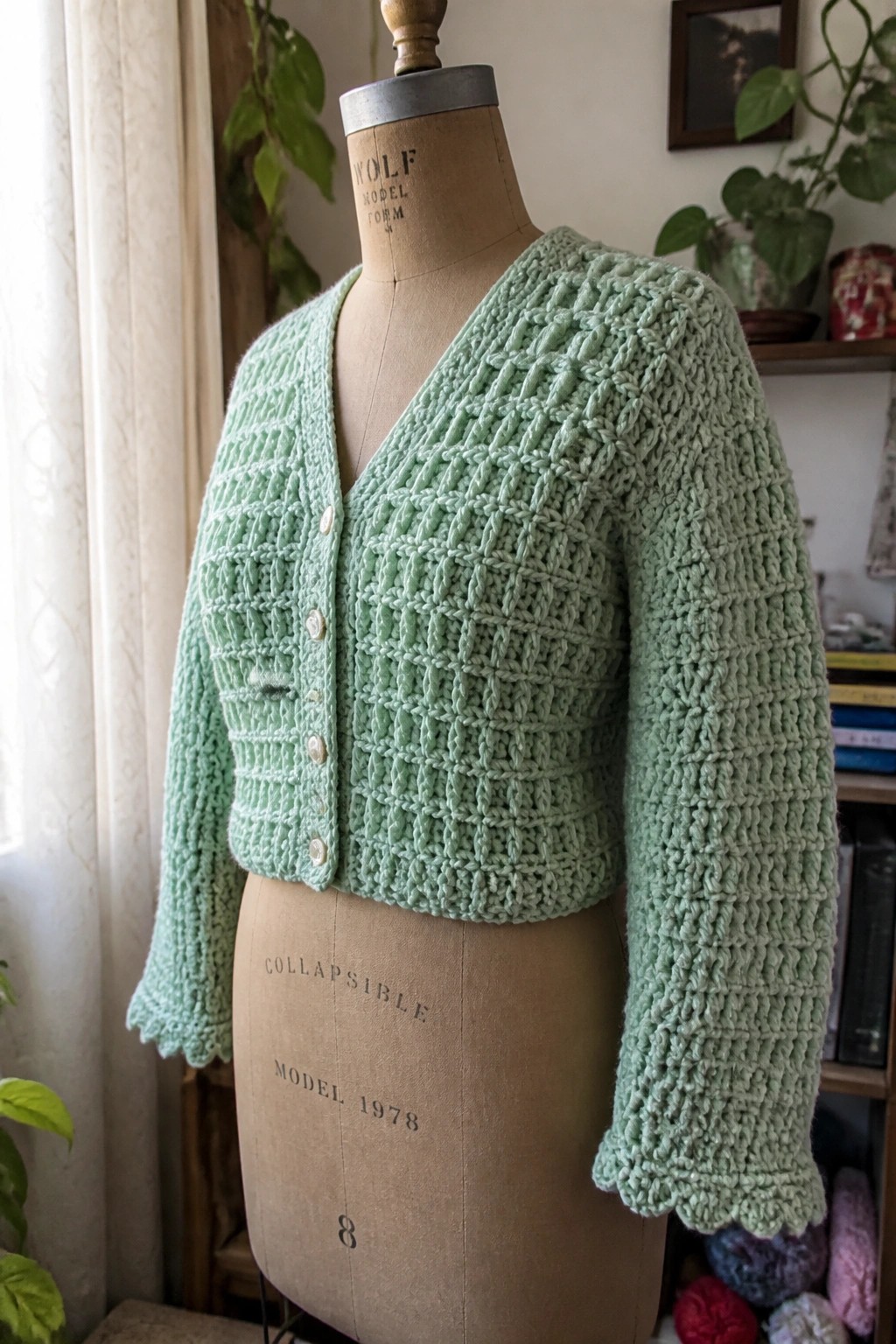
A cropped cardigan built from a repeating grid stitch gives a structured surface that stays flat and holds its shape through the body and sleeves. The button-front opening and three-quarter sleeves turn it into a wearable layer that works over tanks or dresses. Scalloped edging on the cuffs provides a finished detail that contrasts the straight lines of the main fabric.
What makes this idea useful is the cropped length, which pairs with high-waisted bottoms without adding bulk. You can lengthen the body or switch the grid for another textured stitch while keeping the same fit. For gifts, the compact size means less yarn and quicker finishing than a full sweater, so the project shows up well in finished-object photos.
Pastel Striped Pullover with Wide Color Bands

A striped crochet sweater uses wide horizontal bands of color across the body and sleeves to create a simple repeating pattern. The design works as a wearable layer because the color blocks add structure while the textured stitch gives the fabric extra depth and grip. Switching colors every few rows keeps the project moving quickly without extra shaping.
What makes this idea useful is how the stripe widths can be changed to use up leftover yarn or fit different sizes. You can swap the pastel shades for brighter tones or neutrals to match current trends. A project like this works especially well as a casual top since the bold blocks stand out in photos and make the sweater easy to spot in a pattern roundup.
Cable Sweater with Vertical Texture Panels
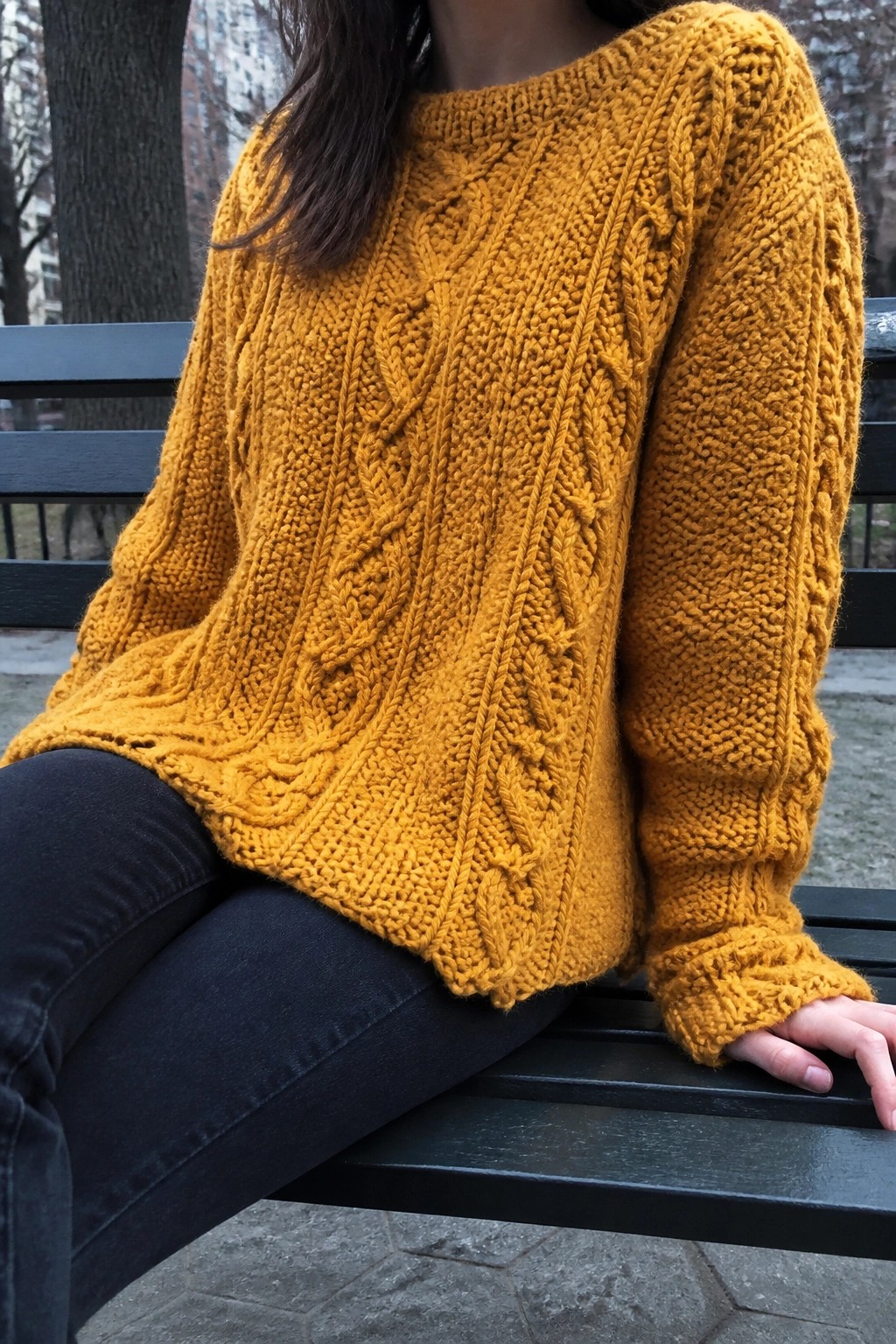
A pullover sweater built around repeating cable sections creates strong vertical lines that run from the hem up through the body and into the sleeves. The cables sit close together to form a dense, raised pattern that gives the fabric noticeable depth without needing color changes. This style works as a standard wearable that layers easily over basic tops.
What makes this idea useful is how the cable layout lets you adjust the overall width by adding or removing pattern repeats. You can swap the yarn color to match different wardrobes or shorten the body and sleeves for a cropped fit. A project like this stands out on Pinterest when shown in a single bold shade because the texture does most of the visual work.
Cropped Sweater with Radiating Bobble Texture

This crochet sweater uses a large circular motif worked in dense bobble stitches that radiate outward from the center to form the front panel. The cropped length and simple round neckline keep the focus on the bold texture while the long sleeves balance the overall shape. It fits into the wearable category as a lightweight top that can be layered over tanks or dresses.
What makes this idea useful is how the motif concentrates the heavy texture in one area instead of covering the entire sweater. You can adjust the finished length by adding or removing rows below the motif or swap the yarn for a smoother fiber if you want less bulk on the sleeves. This style stands out for everyday wear because the circular pattern gives clear visual interest without requiring complex shaping or multiple colors.
Bobble Stitch Gradient Pullover
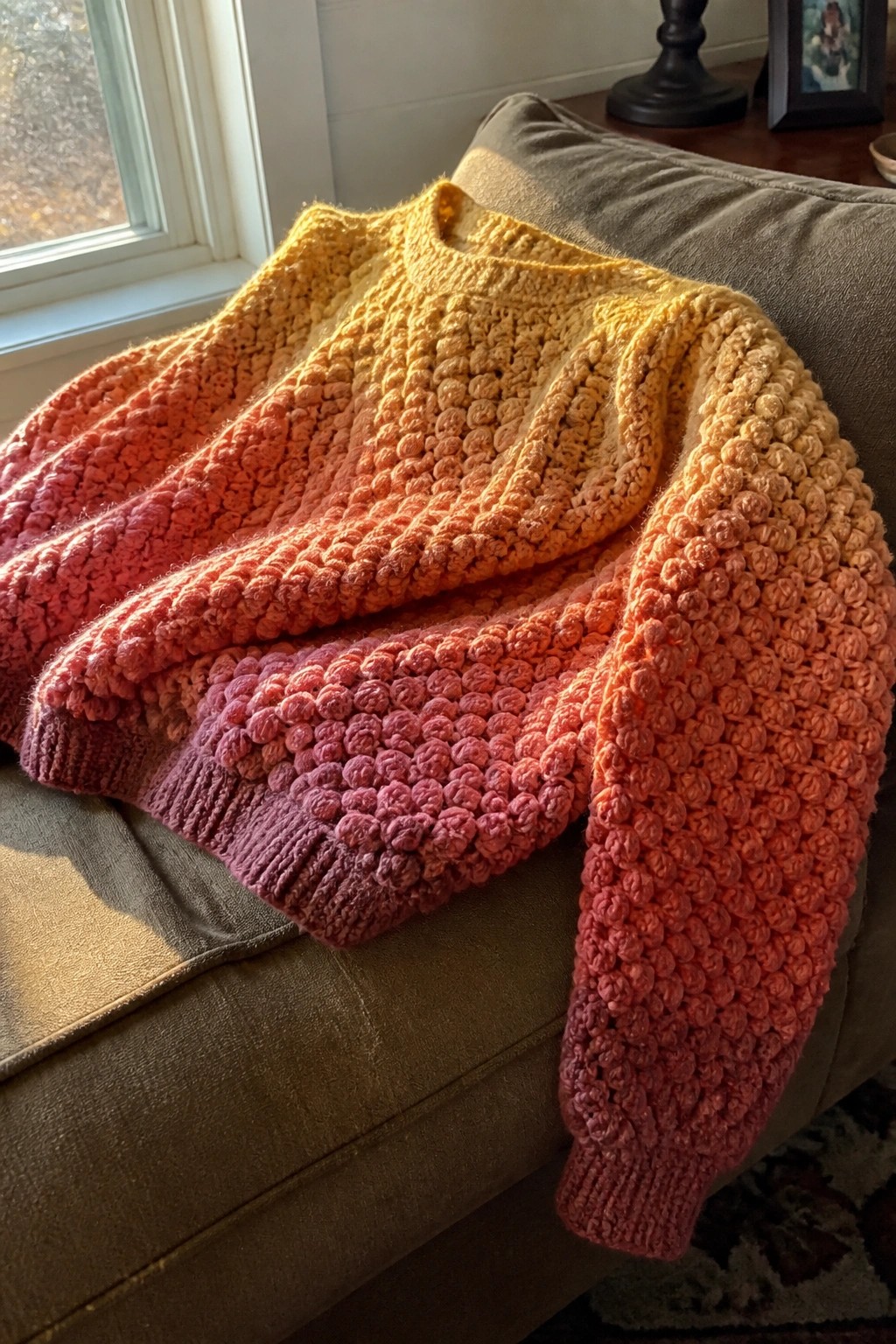
A bobble stitch pullover builds bold texture across the entire surface by repeating a raised stitch pattern on a basic sweater shape. The design uses a long color gradient that shifts from yellow at the top through orange and pink into purple at the hem and sleeves. This approach suits wearables because the texture shows up clearly against the smooth color changes without extra details. It falls into the category of modern sweaters meant for regular use rather than special occasions.
What makes this idea useful is how the gradient yarn carries the color work so the focus stays on the stitch texture. You could change the fit by lengthening the body or widening the sleeves for a roomier look. A project like this works especially well as a quick gift because the same stitch and yarn effect scale to different sizes without new calculations. The raised texture also photographs well for pattern shares since it creates strong shadows in natural light.
Grid-Textured Cropped Pullover

A cropped sweater worked in a dense repeating stitch that creates a raised grid pattern across the front, back, and sleeves. The short body length and set-in sleeves keep the shape simple while letting the texture do the main visual work. This style fits the wearable category and pairs with everyday bottoms without extra layering pieces.
What makes this idea useful is how the single-color texture reads clearly in photos, which helps it perform well on Pinterest boards. You can lengthen the hem or widen the neckline to change the fit without altering the stitch pattern. The cropped length also means less yarn and faster finishing time than a full sweater. Switching to a lighter or heavier yarn weight lets you adapt it for different seasons while keeping the same grid structure.
Heart Cluster Motifs on a Crewneck Sweater
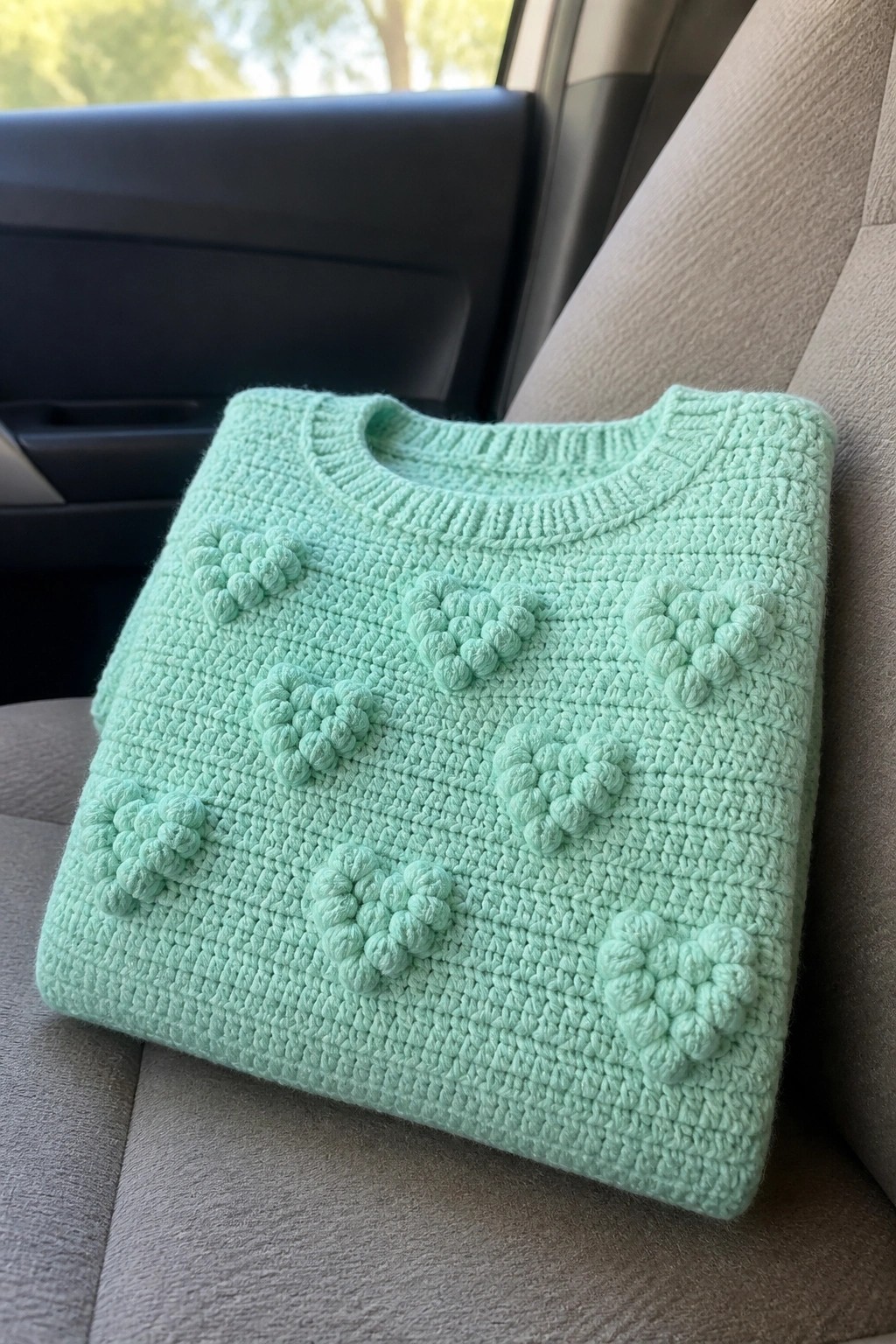
A plain crewneck sweater gets strong surface texture from groups of raised stitches worked into small heart shapes. The motifs are placed in offset rows across the front so the pattern stays balanced without crowding the fabric. This approach keeps the body simple while letting the clustered stitches create the main visual interest.
What makes this idea useful is how easily the heart clusters can be added to any basic sweater pattern you already know. You can adjust the spacing between motifs or change their size to suit a different gauge or garment length. The single-color format also makes it straightforward to swap in another shade or try the same idea on a cardigan or pullover.
Lacy Openwork Pullover with Vertical Bands

An oversized pullover built from repeating openwork panels creates a lightweight sweater that still holds its shape. Solid vertical bands run from hem to neck and separate the lace sections, giving the fabric structure without adding bulk. The rounded neck and wide sleeves keep the fit relaxed and easy to layer over a simple top.
What makes this idea useful is the way the open pattern repeats let you add or subtract width for different sizes without rewriting the whole design. A project like this works especially well in breathable cotton or linen for warmer months. The color choice does a lot of the work here since a single bright shade makes the lace stand out while still reading as modern. You can shorten the body or switch to three-quarter sleeves to turn it into a lighter top.
Strawberry Appliqué Textured Pullover
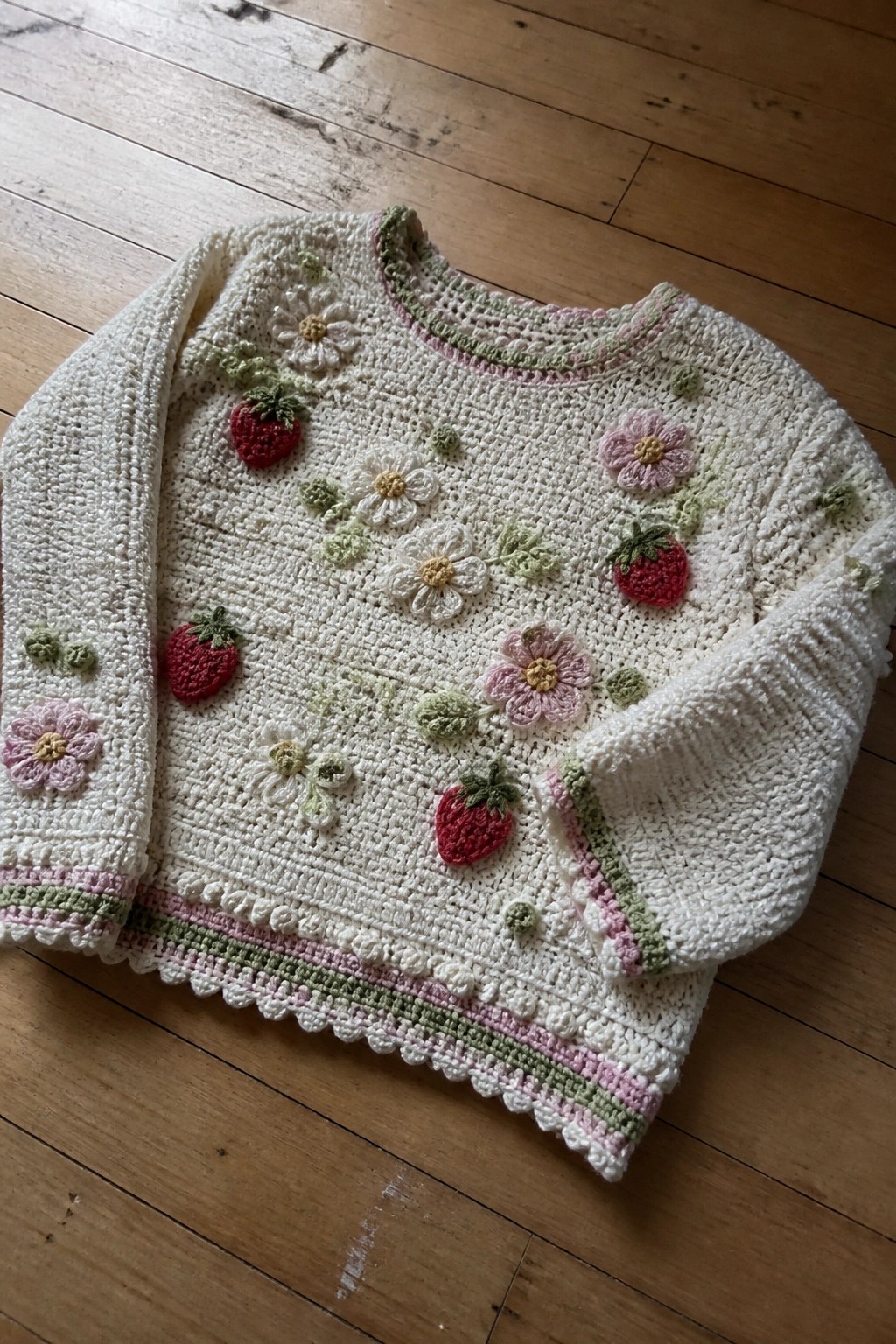
A simple textured crochet sweater becomes more interesting when small strawberry and flower motifs are made separately and sewn on as appliqués. The motifs sit on the front and sleeves in clusters, using red, pink, and green to break up the solid off-white surface without needing complicated stitches across the whole garment. Matching striped borders on the hem, cuffs, and neckline keep the added color consistent.
What makes this idea useful is how quickly the motifs can be adjusted in number or placement to fit different sweater sizes. You can work a basic pullover first, then attach the appliqués afterward, which makes changes simple if the fit needs tweaking. For gifts, this kind of design works well because the motifs can be swapped for other shapes or colors while the main sweater stays the same. The separate pieces also make it easy to try the look on an existing sweater you already own.
Bobble Textured Squares for Sweater Panels

Crochet individual squares that feature a raised bobble pattern worked into the center of each one. Join the squares edge to edge to build larger sections that can become the front, back, or sleeves of a sweater. Keep the color changes soft and sequential so the blocks read as a gentle gradient rather than separate patches. The raised centers create strong contrast against the flatter background stitches and give the fabric noticeable depth.
What makes this idea useful is the modular layout, which lets you adjust the number of squares to fit different body sizes without rewriting the whole pattern. You can limit the bobble squares to just the yoke or front panels while keeping the rest of the sweater in simpler stitches for faster progress. For gifts, a design like this photographs clearly and shows off the texture without needing extra details. Start with a small swatch of four or five squares to check how the colors shift before scaling up to a full garment.
Textured Yoke Pullover
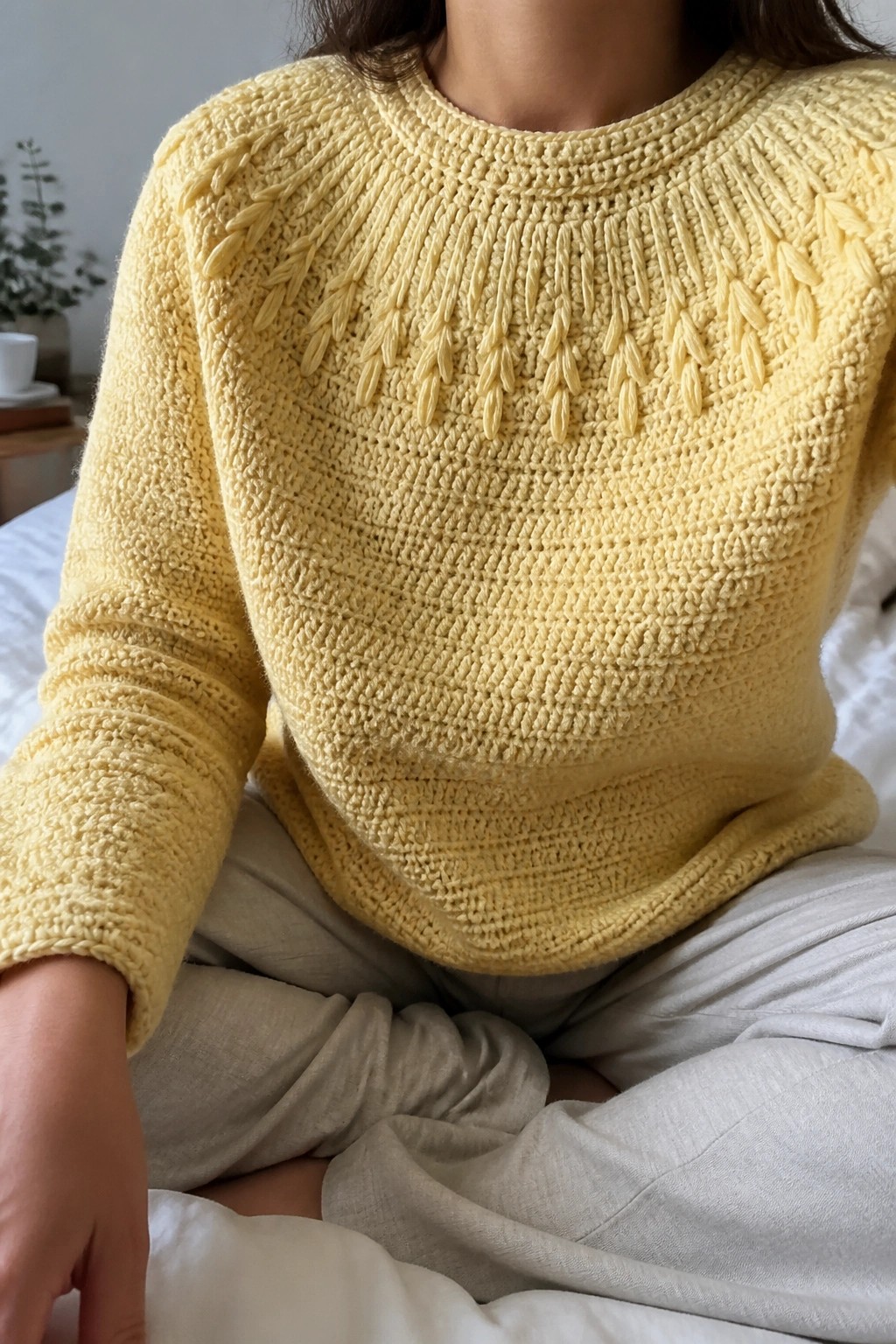
A crocheted sweater with a decorative yoke uses raised, pointed motifs arranged in rows that radiate from the neckline down to the chest. The body and sleeves stay in a simpler, denser stitch that gives structure while the yoke adds the main visual detail. This approach suits a standard pullover shape that can be worn on its own or layered, and the soft yellow color keeps the texture visible without high contrast. It belongs in the wearable category where the focus stays on fit and everyday use rather than heavy embellishment.
What makes this idea useful is the clear division between the detailed yoke and the plain body, which shortens the time spent on repetitive sections. You can scale the yoke motifs up or down to change the finished size or swap the yarn for a different weight if you want more drape. The design works especially well as a first sweater project because the body requires basic stitches while the yoke gives practice with shaping and texture. For Pinterest, the combination of one bright color and a single strong pattern element photographs cleanly and reads as modern rather than traditional.
Oversized Hooded Sweater with Raised Texture

A hooded pullover sweater uses dense, bumpy crochet stitches to create strong surface texture across the body, sleeves, and hood. The relaxed fit with dropped shoulders and a wide hood makes it a practical wearable for layering. The neutral tone keeps the focus on the stitch work rather than color contrast. This type of project falls squarely into the wearable category and suits anyone looking for a quick-to-stitch outer layer.
What makes this idea useful is how easily the shape adapts to different body sizes by simply adding or subtracting rows in the body and sleeves. The hood adds function without extra pieces, so the sweater works as both a standalone top and a layering piece over tees or shirts. For colder climates, the same pattern can be worked in a slightly heavier yarn to increase warmth while keeping the same stitch pattern. A design like this stands out on Pinterest because the bold texture reads clearly even in small preview images.
Textured Lace Scarf with Scattered Flowers

A long rectangular scarf worked in an open lace pattern gives lightweight drape while raised flower motifs placed at intervals create visible texture across the fabric. This approach suits a wearable accessory that layers easily over sweaters or dresses without adding bulk. The combination of airy openwork and compact floral details keeps the surface interesting while the straight edges make it simple to wear as a scarf or narrow wrap.
What makes this idea useful is the ability to change the length and motif spacing to suit different seasons or body types. The open stitch structure works with medium-weight yarn for everyday wear or lighter yarn for a more delicate result, and the flowers can be clustered or spaced farther apart depending on the look needed. For gifts, a design like this stands out because it requires only one skein repeat and adapts quickly once the main pattern is set.
Grid Motif Colorwork Sweater

A sweater made from repeating squares of textured crochet creates a clear grid effect when worked in two high-contrast colors. The blue base holds raised patterns inside each square while the coral outlines form the lines of the grid. This approach suits a standard pullover shape with a ribbed neckline and works as a wearable layer. The scale of the squares keeps the pattern readable without needing fine detail work.
What makes this idea useful is how the grid can be adjusted by changing the number of repeats to fit different sizes. You could swap the coral for a neutral tone to tone down the contrast or repeat the same square on a matching hat. The structure makes this a smart option for using up two full skeins without complicated shaping. For gifts, a design like this translates well to a child’s version by simply reducing the overall grid.
Bobble Textured Sleeves on Sweaters

A sweater sleeve built from repeating bobble stitches forms a raised, rounded surface that catches light and adds depth. The bobbles sit in even rows across the fabric and end at a narrow ribbed cuff that keeps the edge stable. This motif suits any pullover or cardigan where the texture itself serves as the main visual feature rather than colorwork or lace.
The small scale of each bobble makes this easy to adapt to different sleeve widths or yarn thicknesses. You can repeat the same bobble sequence on the yoke or hem to create a matching set of details without extra planning. For gifts, a design like this photographs clearly and shows the stitch work at a glance, which helps it stand out in pattern roundups.
Checkered Bobble Pullover

A checkered bobble sweater builds a grid of raised texture blocks across the body and sleeves by alternating two colors in even squares. The crewneck shape stays simple with ribbed cuffs, hem, and neckline that frame the pattern without competing with it. This layout turns the sweater into a wearable that highlights bold surface texture while keeping the silhouette standard and easy to layer.
What makes this idea useful is how the square repeats make it simple to resize the grid or swap colors for different seasons. The same bobble block method can shift to a cardigan or a longer tunic length without rewriting the whole pattern. For gifts, a smaller version in one main color with a single accent row keeps the texture but cuts down on time. The clear contrast between blocks also photographs well for pattern sharing.
Chunky Textured Turtleneck Pullover
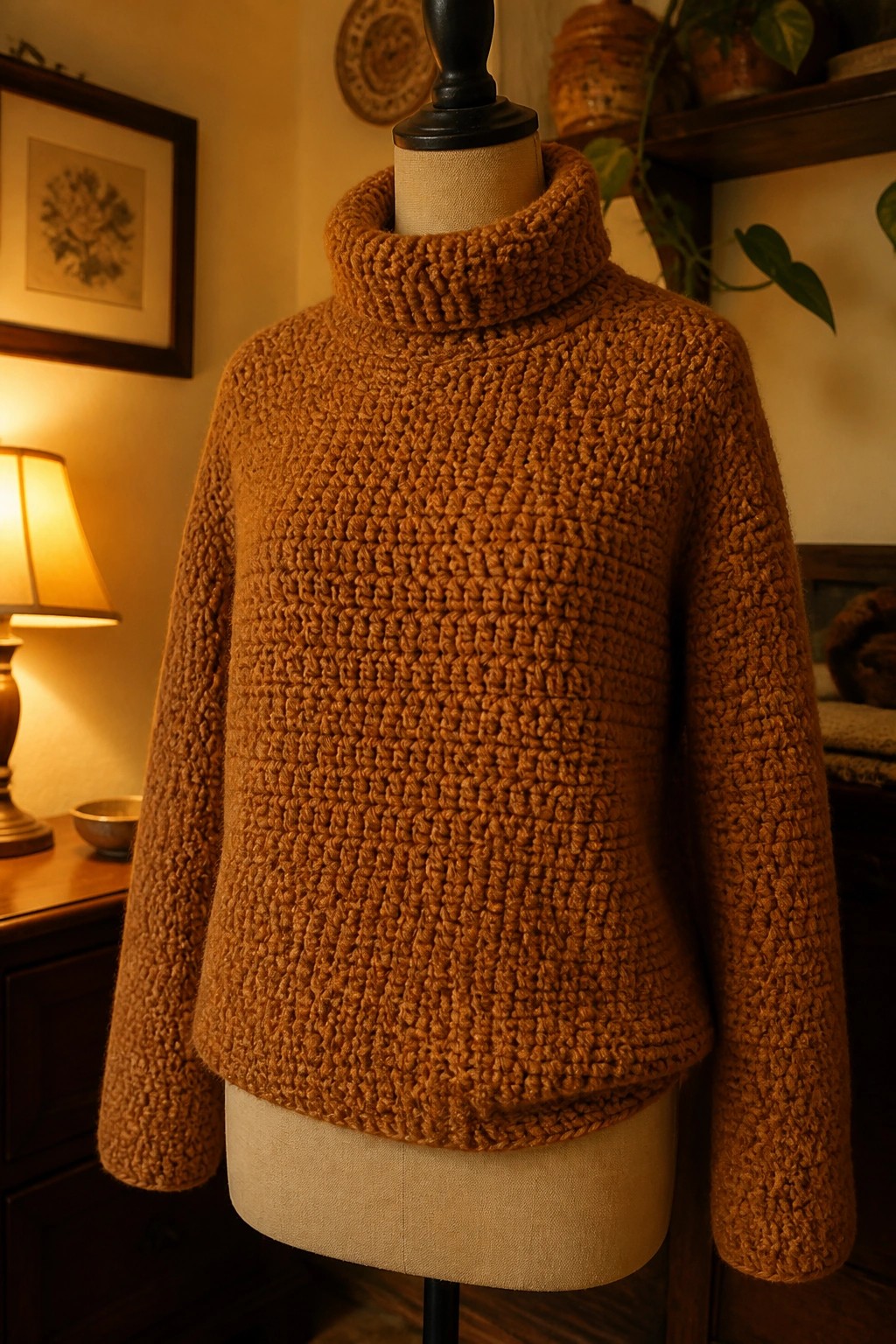
A relaxed pullover sweater built with a dense looped stitch that creates a plush raised texture across the entire surface. The design uses a tall funnel neck and slightly cropped body with dropped shoulders to produce an oversized fit that layers easily over other pieces. This approach keeps the construction simple by working the body and sleeves in one continuous stitch pattern without added motifs or color changes.
What makes this idea useful is the straightforward shape that lets you change the body length or neck height without rewriting the pattern. The same stitch works well in different yarn weights, so you can scale it from a lighter spring layer to a heavier winter version. A neutral tone like the one shown here blends into everyday wardrobes, but the texture still shows up clearly in photos for pattern sharing. This type of sweater adapts quickly for custom sizing since the fabric has natural stretch and forgiving drape.
Scalloped Openwork Cropped Sweater
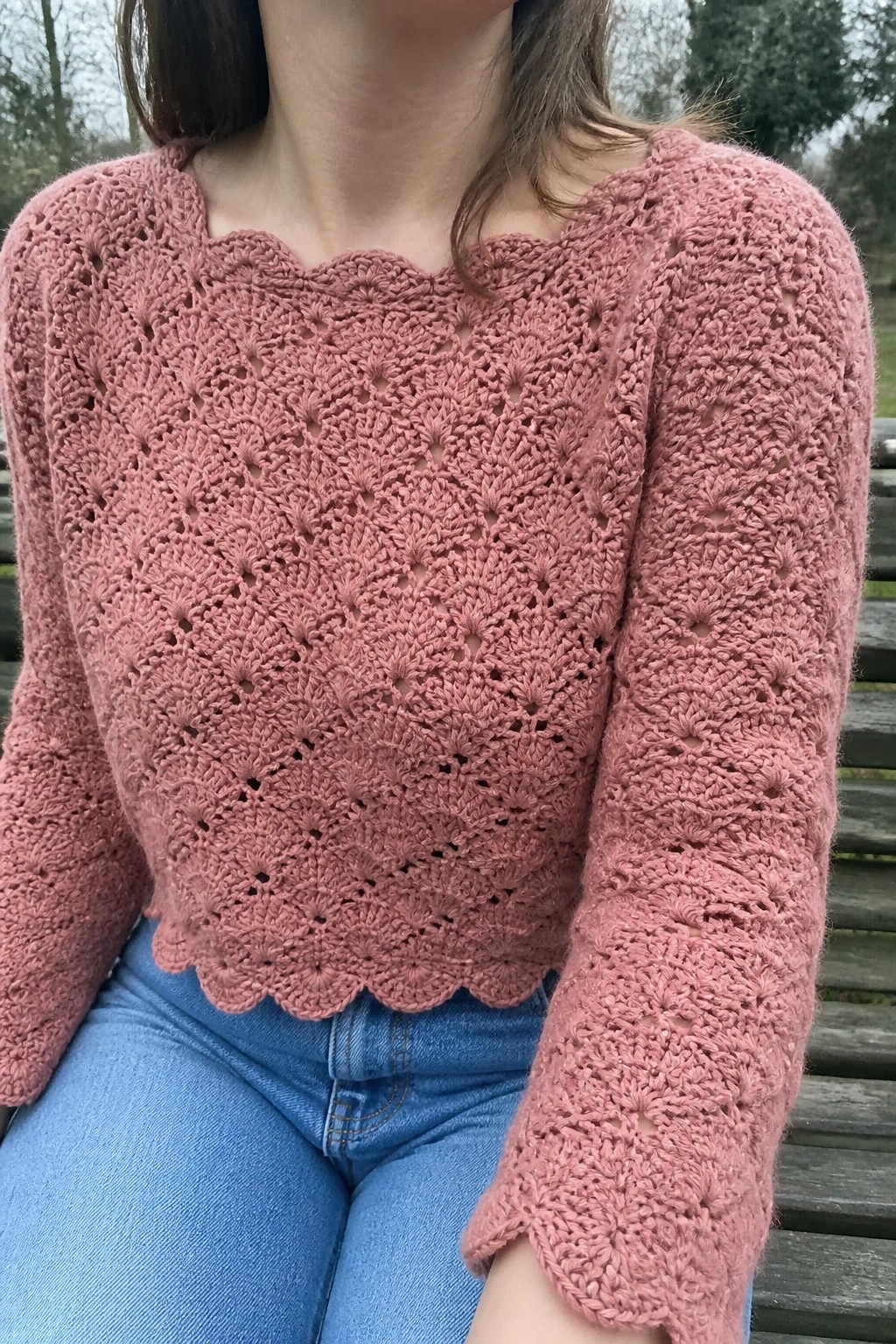
A cropped pullover made with an open lace stitch creates a lightweight top that shows clear texture through the repeated fan-like motifs. Scalloped edges finish the neckline, hem, and sleeve cuffs without needing separate borders. The shape sits at the waist and pairs easily with jeans or skirts for daily wear.
What makes this idea useful is how the open pattern lets you change the length or sleeve width without altering the stitch count much. You can work it in a neutral tone for more wear or switch to a brighter color for a single standout piece. The same lace repeat adapts well to different yarn weights as long as the drape stays light. For gifts, a shorter version in a soft pastel makes a quick seasonal top.
Ribbed Matching Cardigan Set

A ribbed cardigan with a button front forms the main piece in this matching set, paired with a simple beanie and mittens. The consistent vertical ribbing runs through all three items to create a unified look that works as outerwear or a layering piece. The cardigan uses a straight shape with sleeves that taper at the cuffs, while the hat and mittens stay compact for quick finishing. This project falls into the wearable category and suits anyone wanting a coordinated outfit rather than separate accessories.
What makes this idea useful is how the matching pieces save time on planning separate projects. You can adjust the cardigan length or sleeve fit without changing the hat and mittens, or switch the color to match an existing coat. The button placket lets you wear the cardigan open or closed, which adds flexibility for different weather. A project like this works especially well for gifts because the full set feels more complete than individual items.
Heart Bobble Baby Cardigan
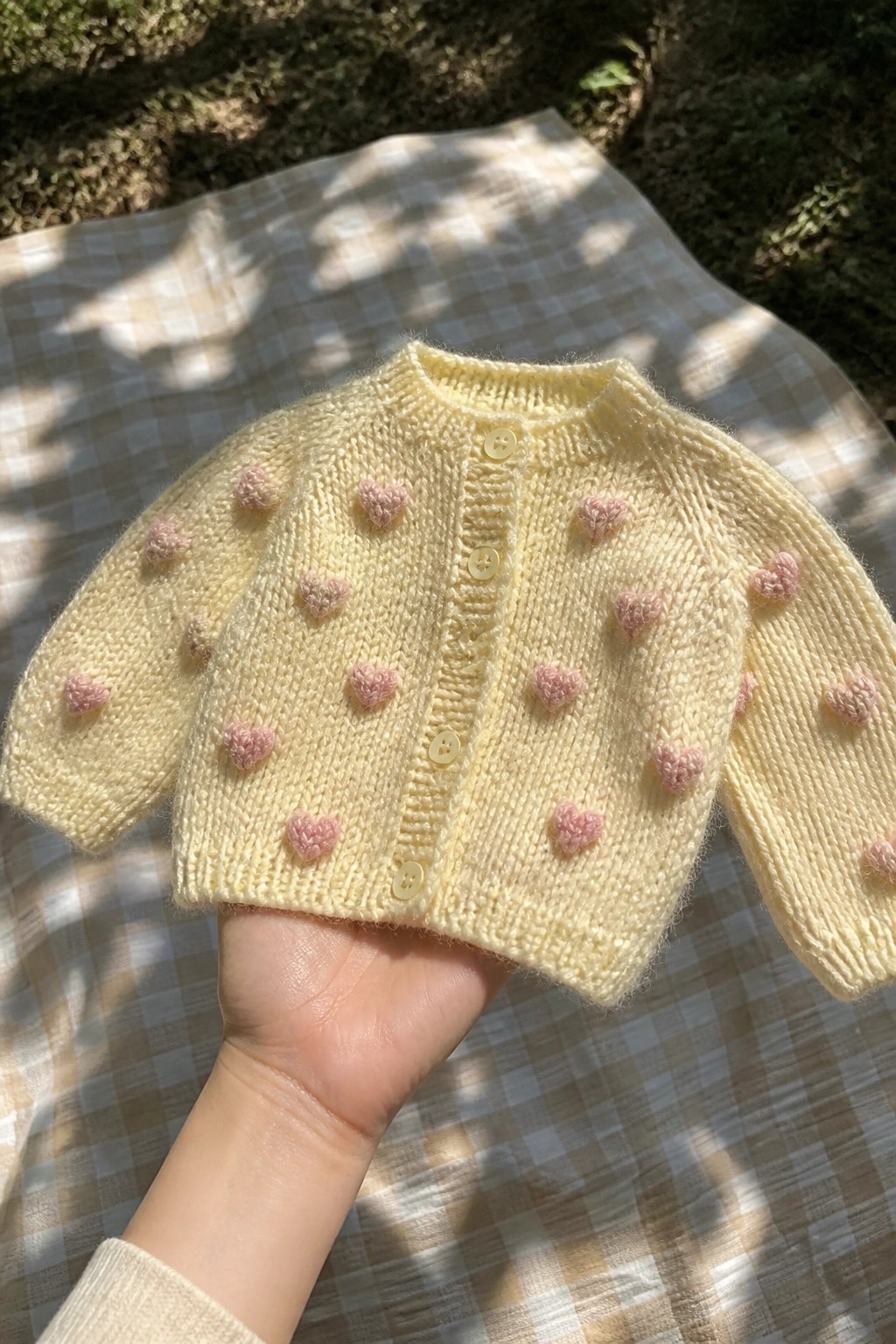
A small cardigan in a light base color uses clusters of raised heart shapes worked directly into the fabric across the front and sleeves. The motifs sit in a loose scattered layout rather than a strict grid, which keeps the texture bold without crowding the surface. Short sleeves and a simple button band make the shape easy to wear on an infant while the contrasting color on the hearts creates clear visual interest. This approach turns a basic wearable into a textured project that still knits up in a compact size.
What makes this idea useful is the small scale, so the textured elements take less time than covering an entire adult sweater. The placement lets you add or remove hearts to fit different yarn amounts or adjust for a boy or girl version. A project like this works especially well as a gift because the finished piece photographs clearly and the texture reads well even in small sizes. You could repeat the same heart clusters on a matching hat or use a single color for a subtler look.
Frequently Asked Questions
What skill level do most of these modern crochet sweater patterns require? Many of the patterns suit intermediate crocheters who know basic stitches and can follow texture instructions like cables or popcorns. Beginners can start with the simpler designs that repeat a single bold stitch throughout the body to build skills gradually before moving to more involved pieces.
Which yarns work best for achieving bold textures in crochet sweaters? Aran or worsted weight yarns with strong stitch definition give the clearest results for textures. Wool blends or smooth acrylics hold shape well and make details stand out without adding bulk. Always swatch to confirm the yarn creates the intended effect before committing to a full project.
How can I ensure a good fit when following one of these patterns? Measure your bust or chest and compare it to the pattern sizing chart before you begin. Crochet a gauge swatch in the main texture stitch and adjust your hook size if needed. Most patterns also include notes on adding or subtracting rows for length adjustments.
What common challenges arise with bold texture patterns and how can I avoid them? Uneven tension can flatten textures so work at a consistent pace and practice new stitches on a small sample first. Use stitch markers to track repeats in cable or bobble sections and count stitches at the end of each row to catch mistakes early.
How should I care for a finished crochet sweater with bold textures? Hand wash in cool water with a gentle detergent to keep textures crisp. Squeeze out excess water without wringing then lay the sweater flat on a towel to dry. Avoid hanging or machine drying which can stretch or distort the bold details.
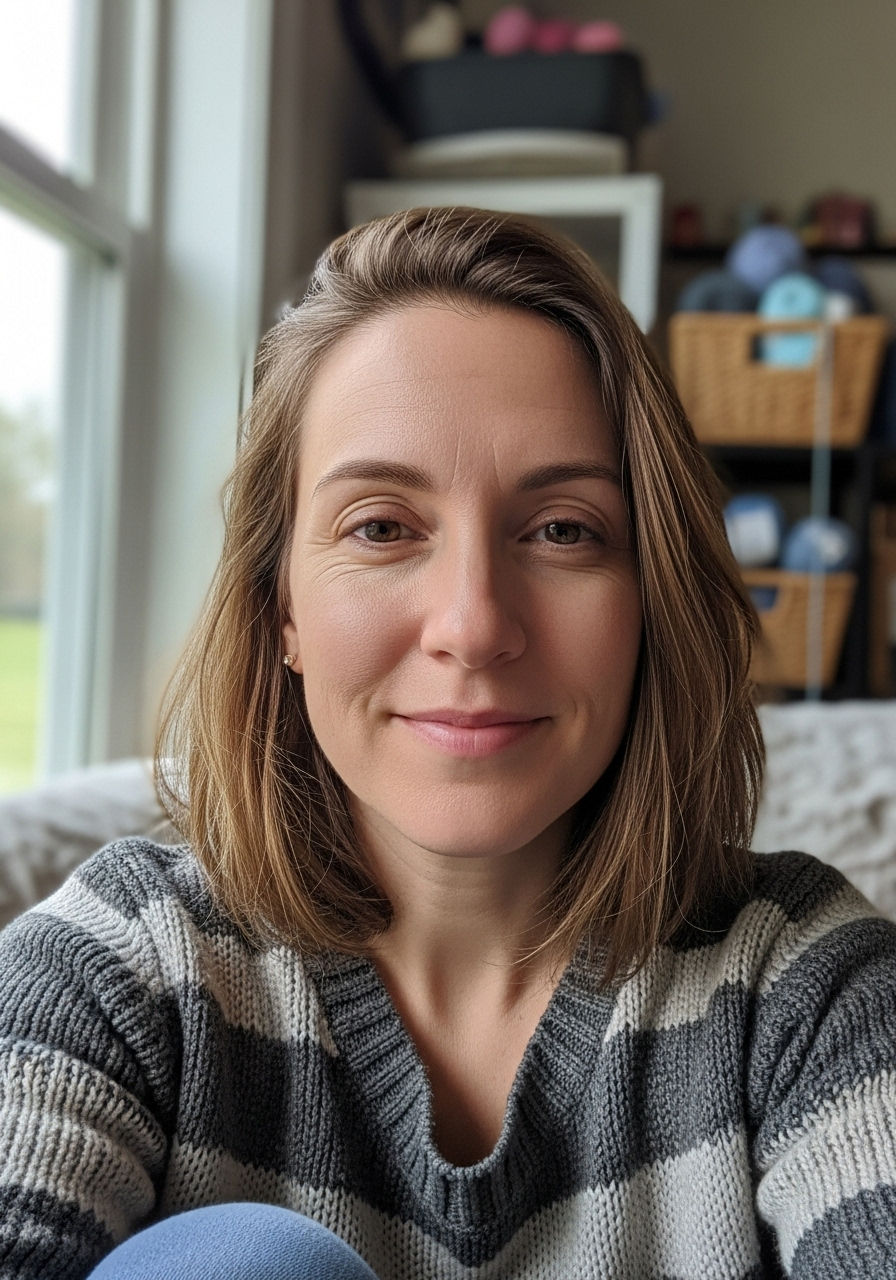
Hi, I’m Emily, the creator of The Yarn Haven.
I picked up my first crochet hook as a kid, sitting on the floor next to my grandmother while she worked on blankets for everyone in the family. What started as a simple hobby slowly became my favorite way to unwind and create something meaningful with my hands.
I believe crochet should feel relaxing, not stressful. Most of the ideas I share are simple, cozy, and practical. Things you can actually finish and enjoy, even if you only have a little time in the evenings.
The Yarn Haven is where I share crochet inspiration, yarn ideas, and projects that fit into real life. Nothing fancy. Just warm, handmade creativity that feels good from start to finish.